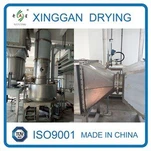


The spray drying process can result in a dried product with desirable properties for subsequent processing, such as direct compression. For example, spray-dried lactose was introduced to the pharmaceutical market in the 1960s as an excipient capable of directly compressing formulations in a simple manufacturing process.
Lactose can be suspended in a saturated aqueous solution prior to the spray drying process. The drying process converts it into free-flowing particles whose mixed solid state is crystalline and amorphous. The resulting unique internal structure can impart good plasticity and cohesion to the dry powder during direct compression. To date, lactose remains one of the more popular excipients for active pharmaceutical ingredients (APIs) in doses that make it suitable for direct compression.
In addition to excipients, spray dryers can also dry APIs for properties such as improved flow, adhesion or agglomeration for tableting and wettability in water. Due to the almost instantaneous transition between liquid and solid phases, spray drying typically results in the formation of predominantly amorphous materials for small molecules, especially when the particle temperature in the process is typically below the glass transition temperature of the material. This is often desirable because it can be used to increase the bioavailability of the resulting drug product. However, the physicochemical stability of the dried product has been a concern due to the high tendency of metastable amorphous to stable solid state transition. Therefore, proper packaging is required to minimize the physicochemical degradation of the drug product during the shelf life.
https://www.stardrying.com/